


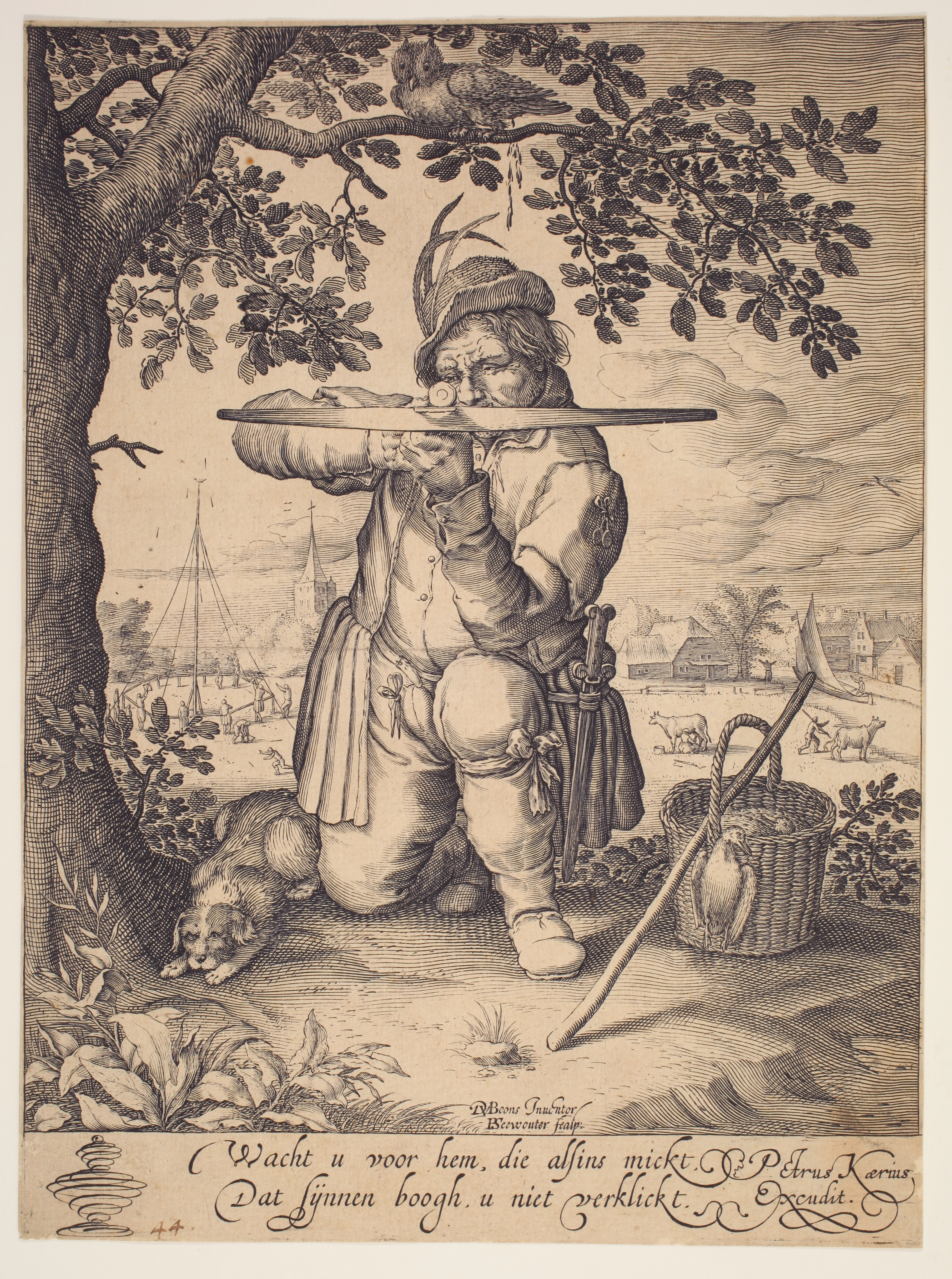
Pieter SERWOUTERS (1586 - 1657): The Crossbowman
SOLD
Etching and engraving, 272 x 200 mm (sheet). Hollstein 18, 2nd state (of 4).
Rare impression of the 2nd state (of 4), with Hendrick de Kempeneer’s address replaced by that of Pieter van der Keere (1570/71 - 1645 or later) in the bottom right-hand corner. Dieuwke de Hoop Scheffer, in Hollstein, describes this state on the basis of a handwritten note by J.Ph. Van der Kellen in Amsterdam, without having seen an impression. In the third state, the address is replaced by that of Cl. J. Visscher.
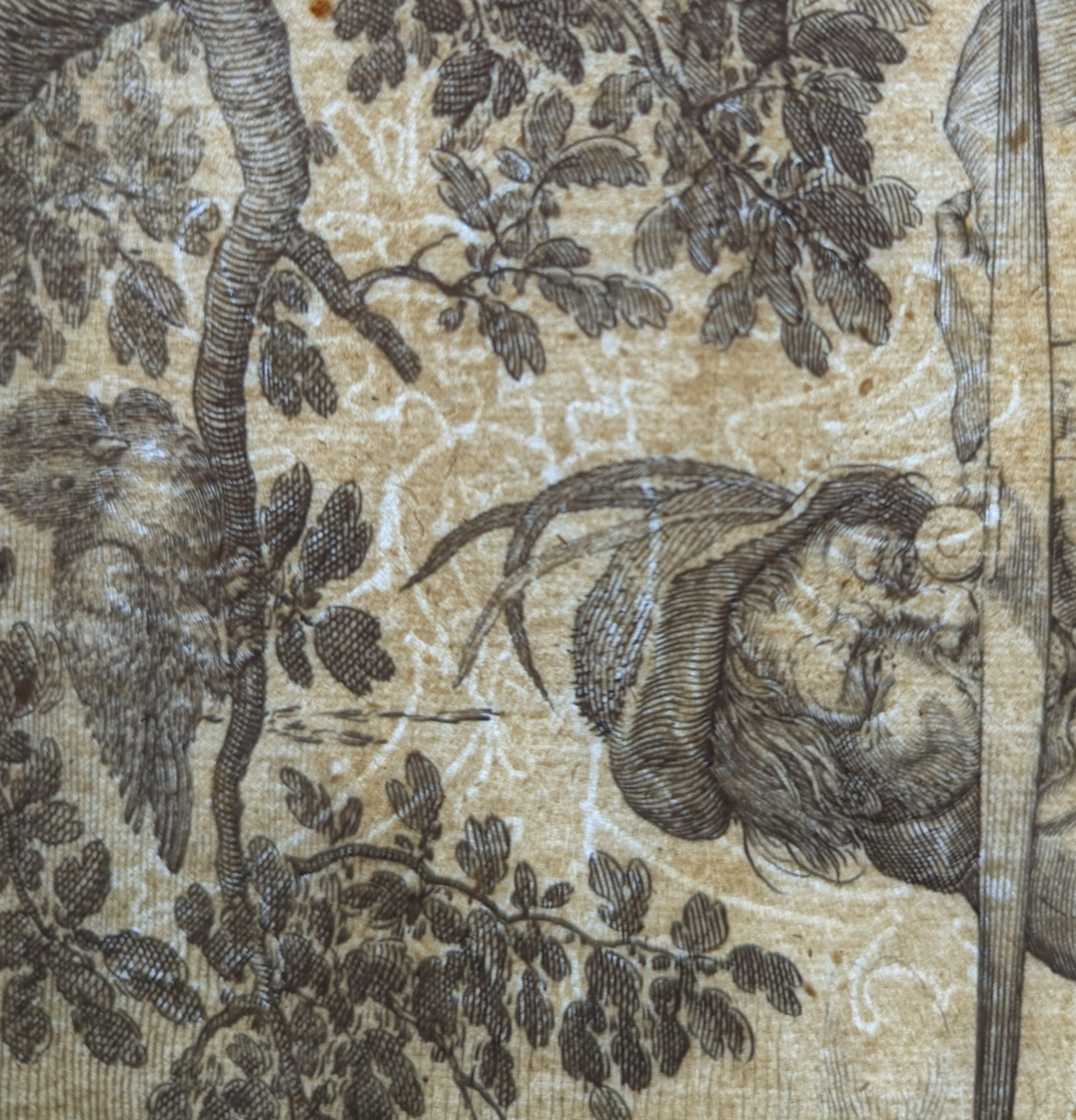
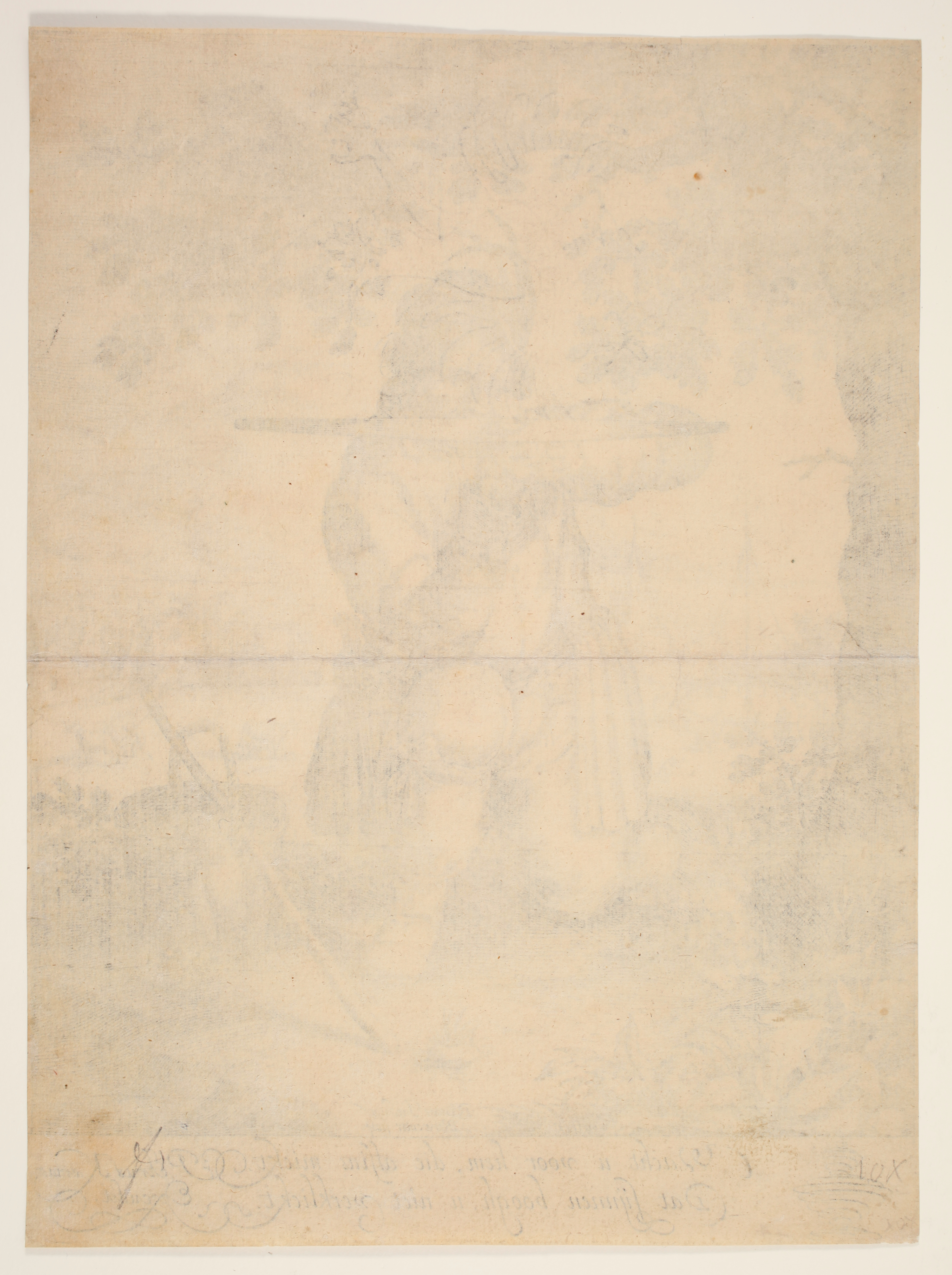
Very fine impression printed on watermarked laid paper (watermark: double-headed eagle). Thread margins all around the borderline. A slight central crease is visible on the left-hand side, and there are two very slight creases at the top, which are not visible on the front. The number 44 is written in pen and ink at the bottom. In very good overall condition.
Ger Luijten notes that the motif of the archer (or crossbowman) aiming at the viewer was a familiar one in the 17th century. This method of engaging the audience by targeting them was indeed sometimes used by artists, with the archer potentially being Cupid, warning the viewer that they too are not immune to falling in love; a sergeant urging suspects and witnesses to tell the truth in court; or even Death, threatening everyone.
Etched after a composition by David Vinckboons, Serwouters’ print depicts a kneeling hunter, aiming his gun at us. To his right, his dog lies in wait; to his left, his basket is already filled with shot birds. Behind him, a village festival is in full swing, with the traditional bird-shooting contest featuring a bird perched on a pole echoing the print’s main motif. A drawing by David Vinckboons shows the same archer kneeling beside his dog, but this time he is accompanied by a milkmaid. The erotic connotation is clear, especially as a couple is depicted in the background. The print The Archer and the Milkmaid, etched by Andries Stock (c. 1580 – c. 1648) after a drawing by Jacques de Gheyn dating from around 1610, features the same erotic motif (see the impression held at the Rijksmuseum). The caption in Dutch appears on Stock’s print as it does on Serwouters’: Wacht u voor hem, die alsins mickt, Dat sijnen boogh, u niet verklickt, which can be translated as: Beware of him who always aims, / Lest you be deceived by his bow. Ger Luijten noted that it is difficult to establish the exact chronology of the various versions of this motif.
In Serwouters’ print, the owl perched above the hunter and defecating on him is a further nod to the viewer, turning the situation on its head: the one who takes us for his target unwittingly becomes a target himself.
Reference: Eddy de Jongh, Ger Luijten: Mirror of Everyday Life: Genreprints in the Netherlands, 1550-1700, 1997, pp. 129-132.